Abstract painting is one of the most liberating forms of artistic expression out there. Unlike representational art, where you’re trying to capture a recognizable subject, abstract work invites you to play with color, shape, texture, and emotion — often without a predetermined destination. Whether you’re picking up a brush for the first time or you’ve been painting for years and want to shake things up, abstract techniques offer an endlessly deep well of creative possibility.
What makes abstract painting so appealing is that the “rules” are largely self-defined. That said, understanding a range of techniques gives you a stronger foundation to work from — even when your goal is to break all the conventions. This guide explores some of the most exciting abstract painting techniques and ideas, along with practical tips to help you find your own visual voice.
What Exactly Is Abstract Painting?
Before diving into techniques, it helps to clarify what abstract painting actually means. At its core, abstract art departs from depicting reality literally. Instead of painting a tree that looks like a tree, you might use sweeping lines and muted greens to evoke the feeling of standing beneath one on a windy afternoon. The emphasis shifts from what you’re painting to how it feels.
Abstract art spans an enormous range of styles — from the gestural expressionism of Jackson Pollock and Franz Kline, to the color field paintings of Mark Rothko, to the geometric precision of Mondrian. That diversity is part of what makes it such a rich space to explore.
Essential Abstract Painting Techniques to Try
Whether you’re working with acrylics, oils, watercolors, or mixed media, the following techniques can help you develop a more expressive, dynamic body of work.
1. Gestural Brushwork
One of the most instinctive abstract techniques is gestural painting — applying paint with bold, expressive movements that reflect your physical energy and emotional state. Think of the mark-making of Abstract Expressionists who believed the act of painting itself carried meaning.
To try this, load a large brush or palette knife with paint and let your arm — not just your wrist — do the work. Use your whole body. Vary the speed and pressure. Fast, sweeping strokes create a sense of movement and urgency, while slow, dragged lines feel heavier and more deliberate. Don’t think too hard; react to what’s already on the canvas.
2. Pouring and Fluid Acrylic Techniques
Acrylic pouring has exploded in popularity over the past decade, and for good reason — it produces stunning, organic results that are difficult to replicate by hand. The basic idea is to thin acrylic paint to a fluid consistency and pour it directly onto the canvas, allowing it to flow and mix in unpredictable ways.
There are several pouring methods worth exploring:
- Dirty pour: Layer multiple colors in a single cup, then pour it all at once onto the canvas.
- Flip cup: Load your cup, place the canvas face down on top, then flip both together and lift the cup.
- Swipe technique: After pouring colors side by side, drag a palette knife or piece of cardboard across the surface to blend and reveal patterns.
- Dutch pour: Use a heat gun or straw to blow the paint across the canvas, creating delicate lace-like cells.
Adding silicone oil to your paint mixture encourages the formation of cells — those beautiful circular formations that have become a signature of fluid art. A few drops go a long way.
3. Palette Knife Painting
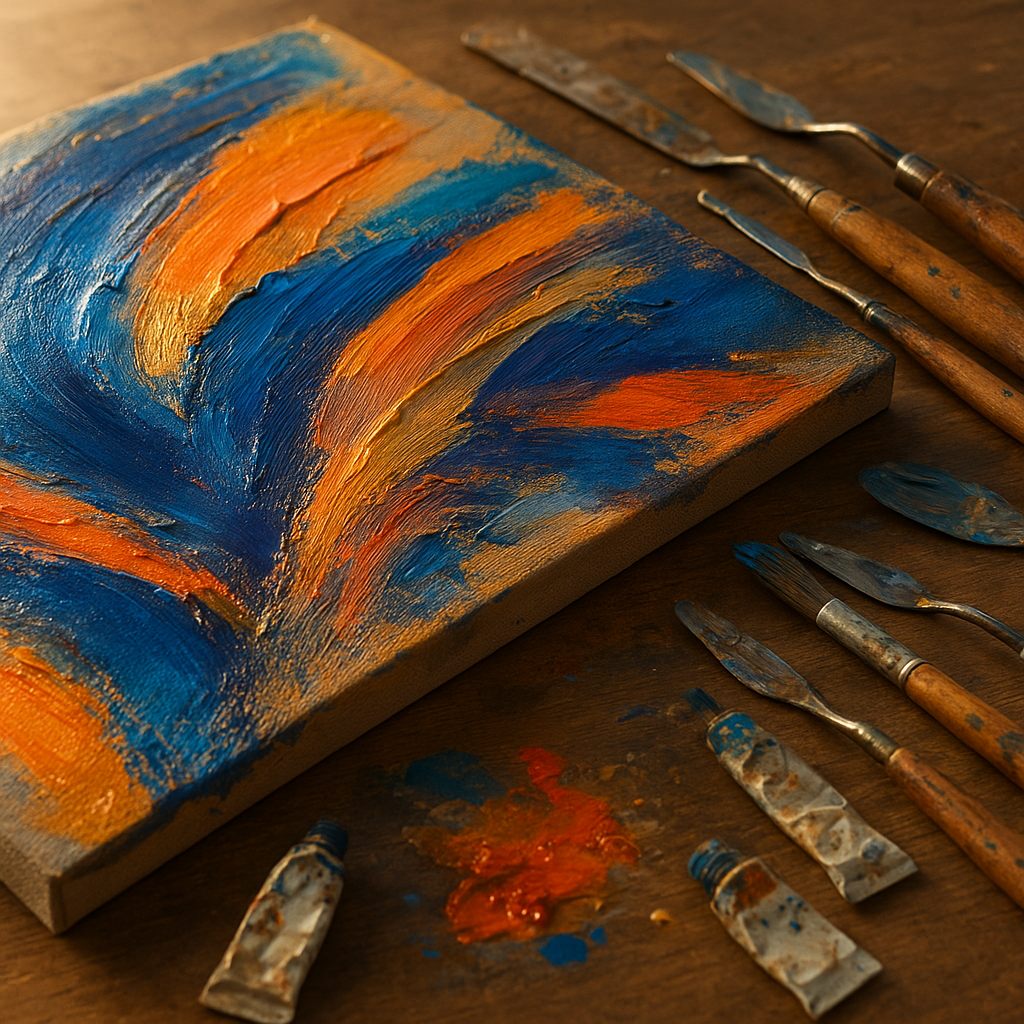
If you’ve never painted with a palette knife, it’s worth trying immediately. Replacing your brush with a flexible metal blade unlocks an entirely different vocabulary of marks — thick ridges of impasto paint, sharp edges, smooth smears, and textured scraping effects that brushes simply can’t replicate.
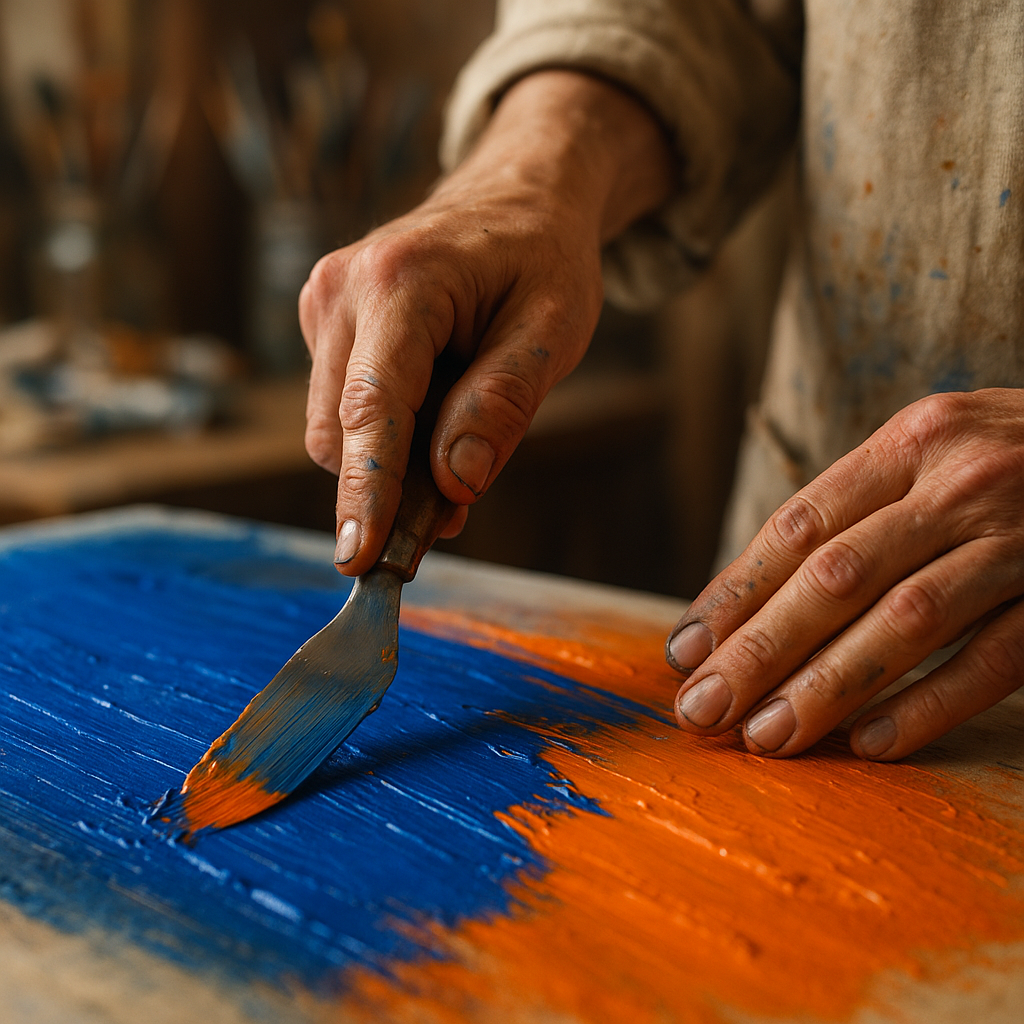
Palette knife painting is particularly effective for building up layers. Apply a color thickly, let it partially dry, then scrape or layer another color on top. The resulting texture can catch light beautifully and give your painting a three-dimensional quality. Many abstract artists use knives exclusively or in combination with brushes for this reason.
4. Texture Building with Mixed Media
Abstract painting doesn’t have to stay within the boundaries of paint alone. Incorporating mixed media materials adds visual interest and tactile depth to your work. Some popular additions include:
- Sand or grit mixed into the paint or applied to the canvas first for a rough, earthy texture
- Tissue paper, newspaper, or fabric adhered with gel medium and painted over
- Modeling paste or gesso applied with a palette knife or comb before painting to create ridges and grooves
- Cheesecloth, bubble wrap, or crumpled plastic pressed into wet paint and lifted to leave behind interesting impressions
The combination of texture and color creates layers of meaning and visual complexity that draw viewers in and reward a closer look.
5. Color Field and Wash Techniques
Not all abstract painting has to be busy or energetic. Inspired by mid-century Color Field painters like Rothko and Helen Frankenthaler, this approach focuses on large areas of softly blended or stained color to create mood and emotional resonance.
With watercolors or heavily diluted acrylics, you can apply transparent washes of color in overlapping layers, allowing each one to dry before adding the next. The result is a luminous, atmospheric quality — almost like looking at light itself. For a more saturated effect with acrylics, try blending wet paint directly on the canvas with a soft brush or even a damp sponge.
6. Scraping and Sgraffito
Scraping into wet paint — a technique sometimes called sgraffito — is a wonderful way to add line work and reveal underlying layers of color. After applying a layer of paint, use the edge of a palette knife, a credit card, a comb, or even a fork to drag through it. Depending on how wet the paint is and how much pressure you apply, you’ll get everything from sharp, defined lines to soft, smeared marks.
This technique works especially well when you’ve built up several layers of different colors. Scraping through the top layer reveals hints of what’s beneath, creating a sense of depth and history within the painting.
Ideas to Spark Your Creative Direction
Having the techniques in your toolkit is just part of the equation. Knowing what to paint — or more precisely, what to respond to — is equally important. Here are several approaches to finding creative direction in abstract work.
Paint from Emotion, Not Subject
Before picking up your brush, sit with a feeling or experience you want to explore. It might be the anxious buzz of a busy week, the calm of early morning, or the bittersweet feeling of a place you’ve left behind. Ask yourself: what colors, shapes, and rhythms belong to this feeling? Work intuitively from there, resisting the urge to make it “make sense” visually.
Use Music as a Guide
Many abstract painters work to music, letting the rhythm, tempo, and emotional tone guide their brushwork. Try painting to something dramatically different from your usual taste — if you typically listen to classical music, try jazz or ambient electronic. Notice how the marks you make change in response.
Work in a Series
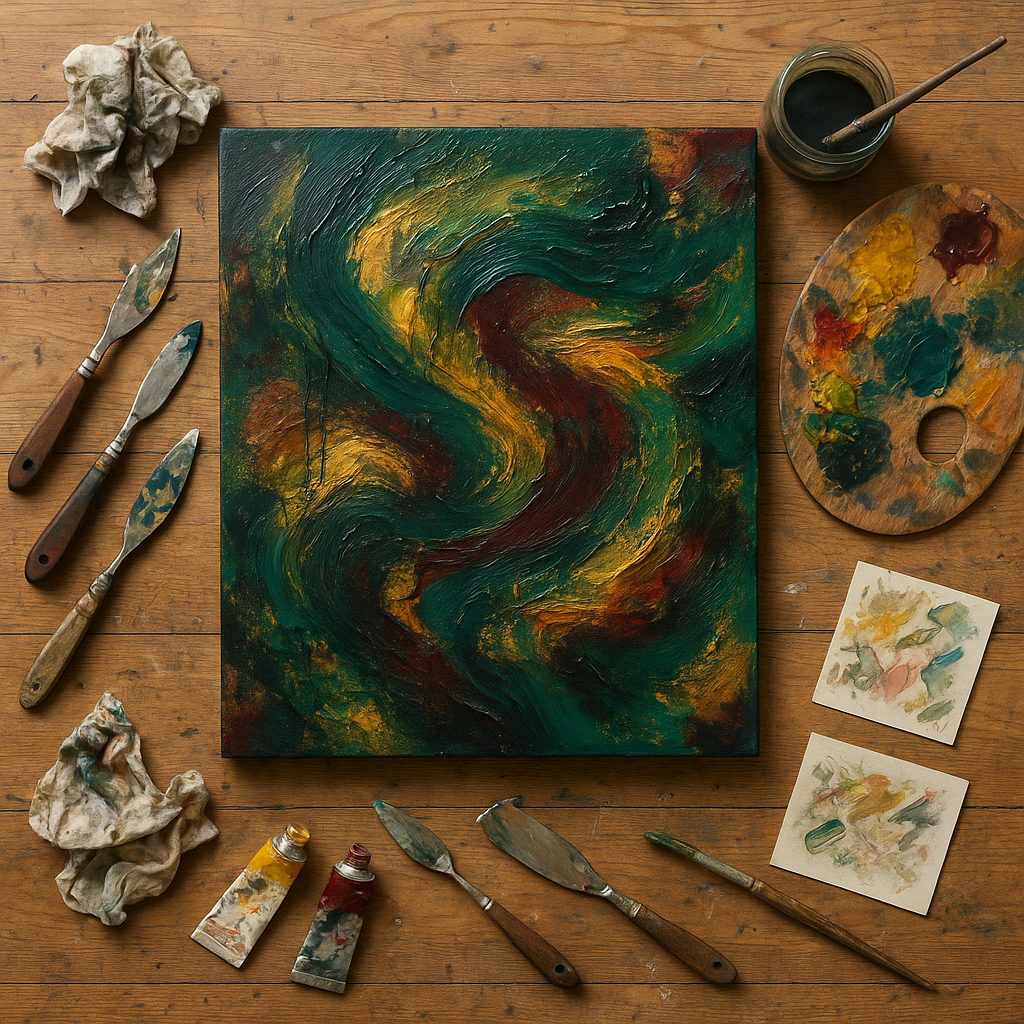
Some of the most compelling abstract work develops across a series of paintings rather than in a single piece. Committing to five or ten paintings around a shared theme, color palette, or technique lets you develop ideas more fully and discover unexpected directions along the way. Don’t judge each piece in isolation — look at how they speak to each other.
Embrace Accidental Marks
Some of the most interesting moments in abstract painting happen by accident — a paint drip, a smear from a stray elbow, a color that bleeds unexpectedly. Rather than covering these up, try responding to them. What would happen if you incorporated that drip into the composition? What if you let the smear suggest a direction for the next mark? Learning to work with happy accidents rather than against them is a skill that separates confident abstract painters from hesitant ones.
Common Questions About Abstract Painting
Do You Need Formal Training to Paint Abstractly?
Absolutely not — and in some ways, less formal training can be an advantage. Without ingrained rules about how things “should” look, beginners often approach abstract work with a freedom that more trained painters have to consciously reclaim. That said, understanding basic color theory, composition principles, and how different mediums behave will help you make more intentional decisions as you develop your practice. You might also find it valuable to explore literature as a source of inspiration to deepen the conceptual thinking behind your work.
What Paints Work Best for Abstract Art?
Acrylic paints are probably the most popular choice for abstract work because they’re versatile, fast-drying, water-soluble when wet, and available in a huge range of consistencies — from fluid to heavy body. They’re also relatively affordable compared to oils. That said, oils offer a richness of color and extended working time that many artists prefer, especially for blended, painterly effects. Watercolors are excellent for loose, transparent washes but require a different mindset since corrections are harder to make.
How Do You Know When an Abstract Painting Is Finished?
This is one of the trickiest questions in abstract work. A useful approach is to step back from the canvas regularly — literally walk away and come back with fresh eyes. Ask whether the painting has a visual focus or resting point, whether the colors and values feel balanced or intentionally off-balance, and whether there’s enough variety in mark-making to hold interest. Sometimes paintings are done sooner than you think; other times, one more layer is exactly what’s needed. Learning to read that takes time and experience.
Building Your Abstract Painting Practice
Consistency matters more than any individual technique. Setting aside dedicated time to paint — even just thirty minutes a few days a week — will accelerate your development far more than occasional marathon sessions. Keep a visual journal or sketchbook where you experiment with color combinations, mark-making ideas, and thumbnail compositions without the pressure of committing to a full canvas.
It’s also worth looking closely at abstract work you admire and asking specific questions about it. What draws you in? Is it the color palette, the texture, the scale, the balance between busy and quiet areas? Developing a visual vocabulary — a sense of what you respond to and why — will inform your own work in ways that are difficult to articulate but easy to feel.
Conclusion
Abstract painting is as broad as it is rewarding. From the spontaneous energy of gestural brushwork to the meditative calm of color field washes, the range of techniques and approaches is vast enough to occupy a lifetime of exploration. The most important thing is to begin — to put paint on a surface and see what happens when you follow your instincts rather than a formula.
Key takeaways from this guide: experiment with a variety of techniques including pouring, palette knife work, and texture building to find what resonates with you; use emotion, music, or personal experience as starting points rather than trying to replicate a subject; embrace accidents and unexpected marks as creative opportunities; and build your practice consistently over time rather than waiting for the perfect conditions or perfect idea. Abstract painting rewards curiosity, persistence, and a genuine willingness to be surprised by what ends up on the canvas.