


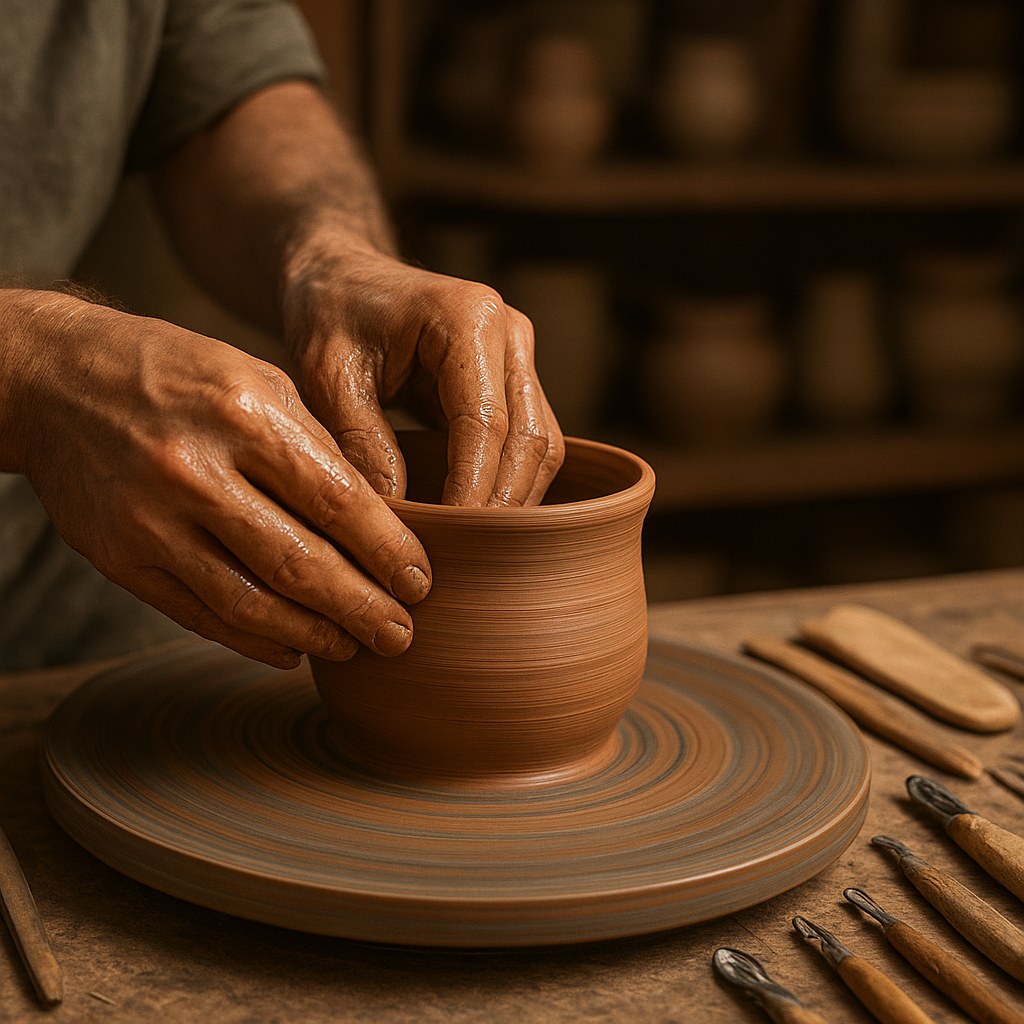
Pottery stands as one of humanity’s oldest art forms, with archaeological evidence dating back over 20,000 years to the Xianrendong Cave pottery fragments discovered in China. Yet the craft we practice today bears little resemblance to those ancient origins—while simultaneously honoring them. The evolution of pottery techniques represents a fascinating collision of traditional wisdom and cutting-edge innovation, creating a landscape where potters can choose between methods perfected over millennia or embrace technologies that were unimaginable just decades ago.
Modern ceramics exists in a unique position within the arts and crafts world. Unlike many contemporary art forms that have abandoned traditional methods entirely, pottery maintains deep roots in historical practices while expanding into territories that blur the lines between craft, industrial design, and fine art. Understanding this evolution matters not just for historians, but for anyone seeking to master the craft today.
From Ancient Foundations to Contemporary Innovation
The earliest pottery techniques emerged from pure necessity—creating vessels for food storage, cooking, and transportation. These primitive methods, developed independently across cultures, established the foundational techniques that modern potters still use: hand-building, wheel-throwing, and firing. What has changed dramatically is our understanding of the chemistry and physics behind these processes.
Ancient potters worked largely through trial and error, developing regional styles based on available materials and cultural aesthetics. The Greeks perfected their black-figure and red-figure techniques around 700 BCE, while Chinese potters during the Shang Dynasty (1600-1046 BCE) were already creating proto-porcelain. Japanese potters developed their distinctive raku firing method in the 16th century, embracing imperfections that modern wabi-sabi philosophy celebrates.
Today’s ceramic artists inherit this rich legacy while benefiting from scientific knowledge that their predecessors lacked. We now understand exactly why certain clay bodies vitrify at specific temperatures, how different firing atmospheres affect glaze chemistry, and which mineral combinations produce particular surface effects. This knowledge hasn’t replaced traditional techniques—it’s enhanced them.
The Revolution of Materials Science
Perhaps no aspect of pottery has evolved more dramatically than our understanding and manipulation of materials. Traditional potters worked with locally sourced clays, often digging and processing raw materials themselves. While this practice continues among some studio potters, the modern ceramics landscape offers unprecedented control over clay bodies.
Engineered Clay Bodies
Commercial clay manufacturers now produce precisely formulated clay bodies designed for specific applications. Porcelain bodies with improved plasticity, stoneware clays with reduced warping tendencies, and specialty clays infused with grog or other additives allow potters to select materials matched exactly to their intentions. According to industry data, over 85% of contemporary studio potters use commercially prepared clay bodies, compared to less than 20% in the mid-20th century.
This shift doesn’t represent a loss of authenticity—it represents liberation. Potters can now focus on form and surface rather than spending weeks processing raw clay. However, the counter-movement toward locally sourced, wild clays has also gained momentum, particularly among artists interested in place-based practice and environmental sustainability.
Advanced Glaze Chemistry
Modern glaze chemistry has transformed from guarded secret to accessible science. Digital glaze calculation software allows potters to predict results with remarkable accuracy, adjusting formulations to achieve specific surface qualities, colors, and textures. The development of commercial glazes has made previously difficult effects—like crystalline glazes or reliable reds at lower temperatures—achievable for hobbyists and professionals alike.
The internet has democratized glaze knowledge. Resources like Glazy.org host thousands of tested glaze recipes with photographs, allowing potters to learn from global experimentation rather than relying solely on local knowledge or expensive workshops.
Technological Integration in Ceramic Practice
The integration of technology into pottery practice represents perhaps the most significant evolution in the field’s recent history. This isn’t about replacing hand skills—it’s about expanding possibilities.
3D Printing and Digital Fabrication
Ceramic 3D printing has moved from experimental curiosity to practical tool. Printers specifically designed for clay extrusion can create forms impossible to achieve through traditional methods—impossibly thin walls, complex lattice structures, and precise geometric patterns. Artists like Jonathan Keep and Unfold Studio have pioneered techniques that use digital fabrication as a starting point, often combining printed elements with hand-finishing.
The technology raises interesting questions about authorship and craft. Is a 3D-printed pot “handmade”? The ceramics community has largely answered yes, recognizing that the tool matters less than the creative vision guiding it. The printer becomes another tool in the potter’s arsenal, like the wheel or the kiln.
Precision Firing Technology
Kiln technology has undergone remarkable advancement. Computer-controlled kilns allow for firing schedules of extraordinary complexity—multiple ramps, holds, and cooling curves programmed to the degree. This precision enables effects that were once achievable only through years of experience and considerable luck.
Alternative firing methods have also evolved. While wood-fired kilns continue to attract potters seeking atmospheric effects, modern designs have improved efficiency and reduced environmental impact. Some contemporary wood kilns use 40% less fuel than traditional designs while producing more consistent results.
Hybrid Techniques: Where Traditional Meets Contemporary
The most exciting developments in modern ceramics often occur at the intersection of old and new. Contemporary potters increasingly combine techniques across historical periods and cultural traditions, creating hybrid approaches that defy easy categorization.
Consider the resurgence of nerikomi (also called neriage), a Japanese technique involving colored clays layered and patterned. While historically used for subtle, organic patterns, contemporary artists like Alice Walton and Colleen McCall push the technique toward geometric precision and bold color blocking that feels distinctly modern. Similarly, Korean potters have revitalized the ancient buncheong technique—white slip on dark clay—using it as a canvas for contemporary imagery and abstract expression.
The concept of “surface” itself has evolved. Traditional decoration focused primarily on glaze and painted design. Modern approaches incorporate:
- Texture manipulation: Using tools, organic materials, and digital fabrication to create complex surface topography
- Alternative materials: Incorporating metal, glass, found objects, and organic materials that transform during firing
- Post-firing treatments: Sandblasting, acid etching, and cold-working techniques borrowed from glass and metal arts
- Multiple firings: Layering effects through successive firings at different temperatures
What Techniques Do Modern Potters Actually Use?
Survey data from the American Ceramic Society reveals interesting patterns in contemporary practice. While wheel-throwing remains the most common primary technique (used by 62% of studio potters), hand-building has seen significant growth, particularly among younger artists. The rise of social media platforms like Instagram has favored hand-building’s sculptural possibilities and process-oriented documentation.
Hybrid approaches dominate professional practice. Most successful contemporary ceramic artists combine multiple techniques—throwing forms that are then altered, hand-built elements attached to thrown bases, or mold-making from hand-built prototypes. This technical flexibility reflects broader cultural shifts toward interdisciplinary practice.
The question “Is pottery still relevant in the digital age?” finds its answer in robust market data. The global ceramics market reached approximately $232 billion in 2023, with studio pottery experiencing particular growth. The “maker movement” and increased interest in mindfulness practices have driven unprecedented enrollment in pottery classes. Many community studios report waiting lists for beginner courses—a situation unimaginable two decades ago.
Sustainability and the Future of Ceramic Practice
Environmental consciousness is reshaping pottery techniques in fundamental ways. The ceramics community increasingly confronts the environmental impact of firing—particularly gas and wood kilns—and the mining of raw materials.
Innovative responses include:
- Electric kiln optimization: Improved insulation and firing schedules reduce energy consumption by up to 30%
- Alternative fuel kilns: Designs using waste vegetable oil, biofuels, or solar-assisted firing
- Local material sourcing: Reducing transportation impacts and connecting practice to place
- Recycling systems: Closed-loop water systems and comprehensive clay reclamation
Perhaps most intriguing is the development of low-fire and no-fire alternatives. While traditional high-fire ceramics offer unmatched durability, lower temperature firing significantly reduces energy consumption. Some contemporary artists work with air-dry clays or cold-casting techniques that eliminate firing entirely—though these remain controversial among traditionalists.
Learning Pottery in the Modern Era
The transmission of pottery knowledge has transformed as dramatically as the techniques themselves. Where learning once required apprenticeship or formal education, today’s aspiring potters access instruction through multiple channels. YouTube tutorials, online courses, and virtual workshops supplement traditional in-person learning.
This democratization has accelerated innovation. Techniques that might have taken decades to spread through the ceramics community now circulate globally in weeks. The “Instagram effect” has particularly influenced surface decoration, with certain aesthetic approaches—like the current popularity of carved texture and matte glazes—achieving rapid international adoption.
However, this accessibility creates challenges. The depth of knowledge required for advanced ceramic practice—understanding kiln atmosphere, glaze chemistry, and material behavior—remains difficult to acquire through fragmented online learning. Many educators advocate for hybrid approaches combining digital resources with hands-on mentorship.
Conclusion: Tradition as Foundation, Innovation as Direction
The evolution of pottery techniques in modern ceramics reflects broader patterns in contemporary craft: respect for tradition combined with fearless experimentation. Today’s potters benefit from scientific understanding their predecessors lacked, access to global knowledge networks, and technologies that expand creative possibilities. Yet the fundamental appeal of pottery remains unchanged—the transformation of earth and fire into objects of beauty and utility.
The most successful contemporary ceramic artists understand that technique serves vision. Whether working with ancient coil-building methods or cutting-edge digital fabrication, the goal remains consistent: creating objects that speak to human experience. The evolution continues, driven by makers who honor the past while refusing to be constrained by it.
For those entering the field today, the landscape offers unprecedented opportunity. The tools exist—ancient and modern—to realize virtually any ceramic vision. The challenge, as always, lies in developing the skill and discernment to use them well.